DLP Upgrade
Drivers lack clear visibility of their level status, upgrade progress, and tangible benefits, reducing motivation to complete tasks and engage with the loyalty system.
This redesign improves level visibility, task progress clarity, and benefit transparency to strengthen driver motivation and retention.
Business Objectives
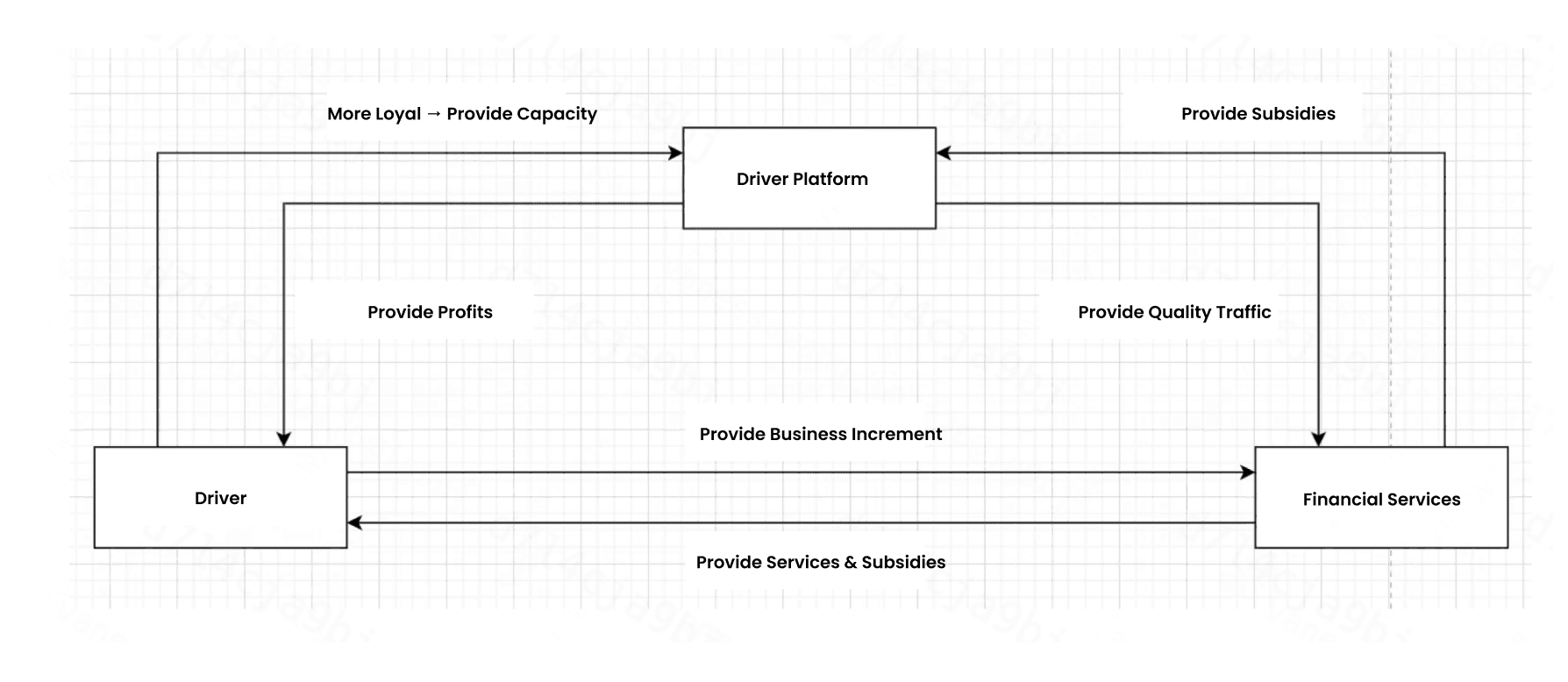
Post-Launch Key Performance Indicators
Awareness & Progression Motivation: Drivers can clearly identify unmet criteria within the Tier System, effectively incentivizing them to pursue upgrades.
Behavioral Modification: Research indicates that the tier advancement process successfully encourages drivers to improve their service standards.
Tier Distribution Optimization: Awareness of tiering rules among "Tier 0" drivers surged from 5% to 55%. Additionally, there is a measurable increase in the proportion of "Tier 1" drivers, optimizing the overall supply structure.
business background
Current Situation
Based on local field research, road tests, and in-depth interviews with PMs and frontline operations, we identified several critical pain points in the LatAm market: suboptimal service attitudes, high cancellation rates, low active hours, and a tendency to "cherry-pick" high-value orders while rejecting long-distance or remote requests.
Strategic Rationale
To address these, the team evaluated various interventions. While subsidies and campaigns provide immediate but temporary boosts, the Driver Leveling Platform (DLP) was selected as the optimal solution. As a "long-term growth lever," DLP moves beyond transactional incentives to create a structured path for driver progression, ensuring consistent service quality and platform stickiness.
business observation
Insufficient Tier Perception
While the Driver Tier System is a vital long-term lever for incentivizing positive driving behavior, the current interface suffers from unclear information delivery. Ambiguous communication regarding tiering rules has led to a gap in driver understanding, which subsequently diminishes their motivation to engage with the progression system and pursue upgrades.
Vague Value Proposition of Perks
Core benefits, such as gas station discounts, are not presented clearly. Specifically, there is a lack of monetary visualization, making it difficult for drivers to perceive the actual savings or earnings associated with each tier. This absence of "tangible value" fails to provide sufficient financial incentive, thereby dampening driver enthusiasm for tier advancement.
Poor Visibility of Task Progression
The task progress page lacks intuitive visual cues. Specifically, there is insufficient signaling for "incomplete tasks," making it difficult for drivers to identify the specific requirements needed for their next upgrade. This lack of clarity hinders the driver's ability to prioritize actions, leading to a significant drop in task completion rates.
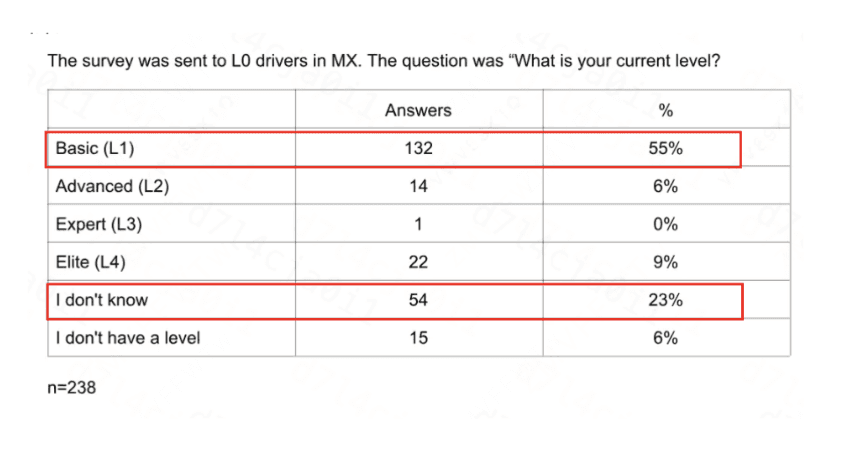
Design Intervention:Problem Decomposition & Strategic Translation
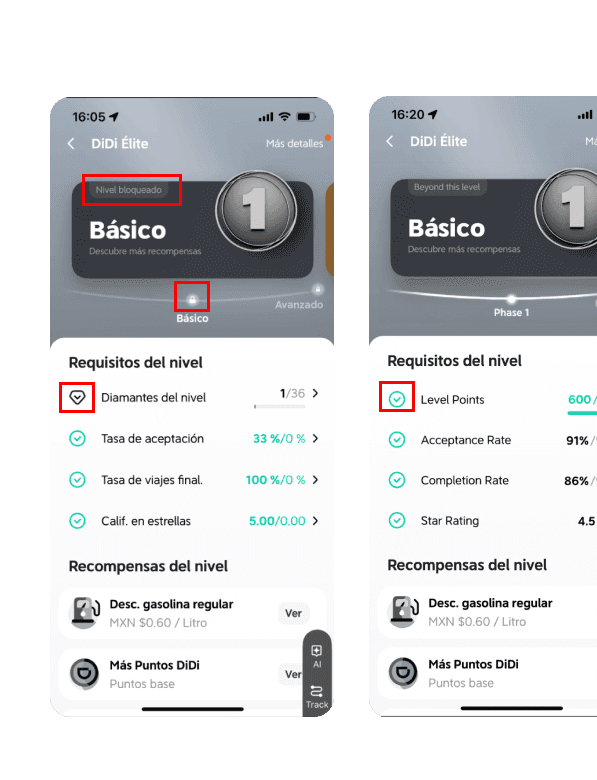
Insufficient level perception
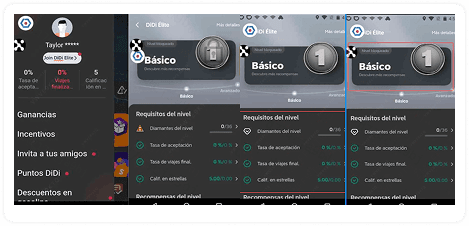
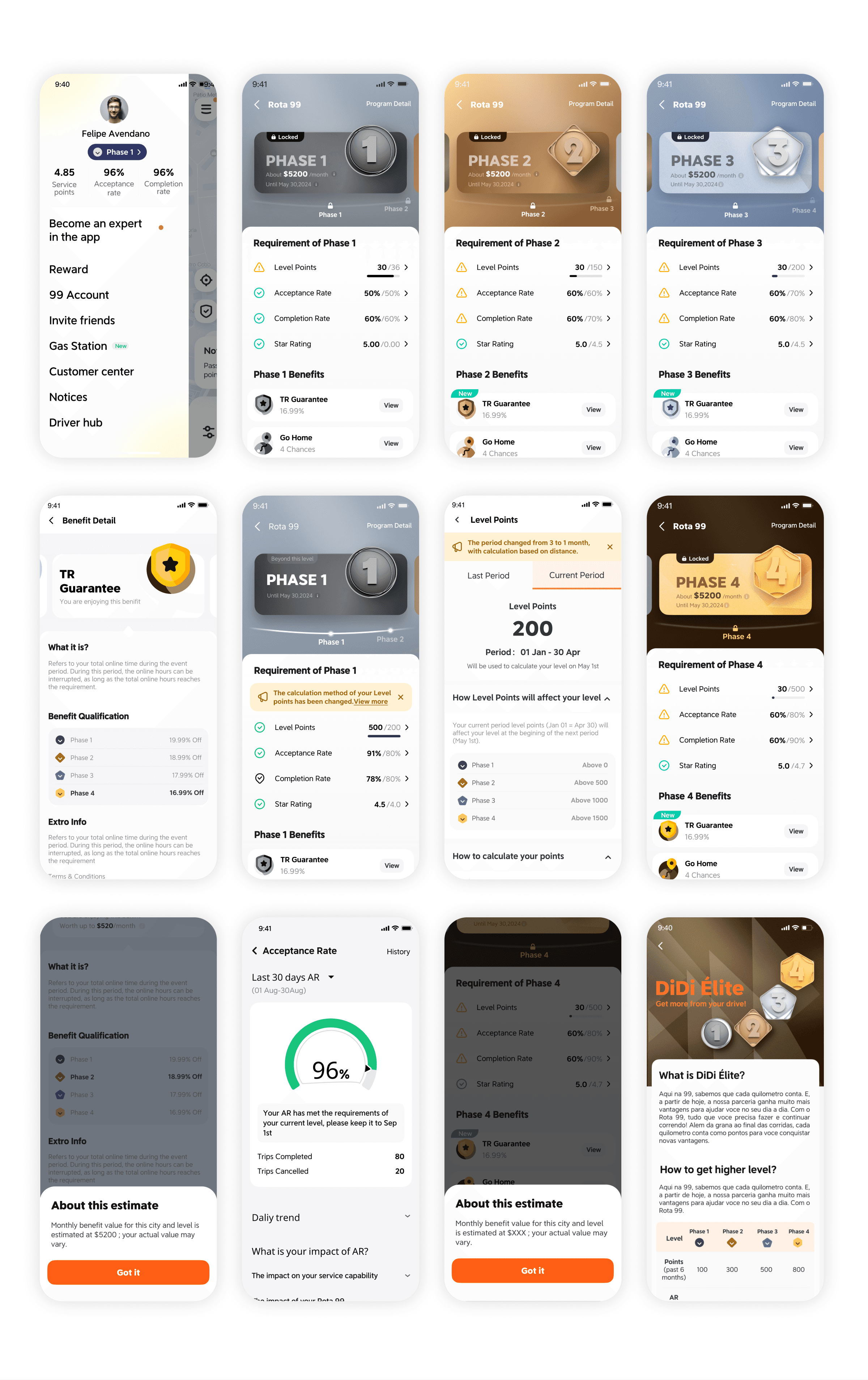
On the driver rating center page, the lock icon on the driver rating card is almost invisible; the rating status text is not prominent. Requirement: Emphasize the lock icon and rating status text.
On the driver level center page, the requirement icon weakens the presentation of conditions that drivers have failed to meet; the lock icon is almost invisible, making it difficult for drivers to understand their level, especially level 0 drivers. Requirement: Strengthen drivers' awareness of their level; the expression of conditions that drivers have failed to meet in the driver level center is weak. Requirement: Highlight the unmet requirements to make incomplete tasks more noticeable to drivers.
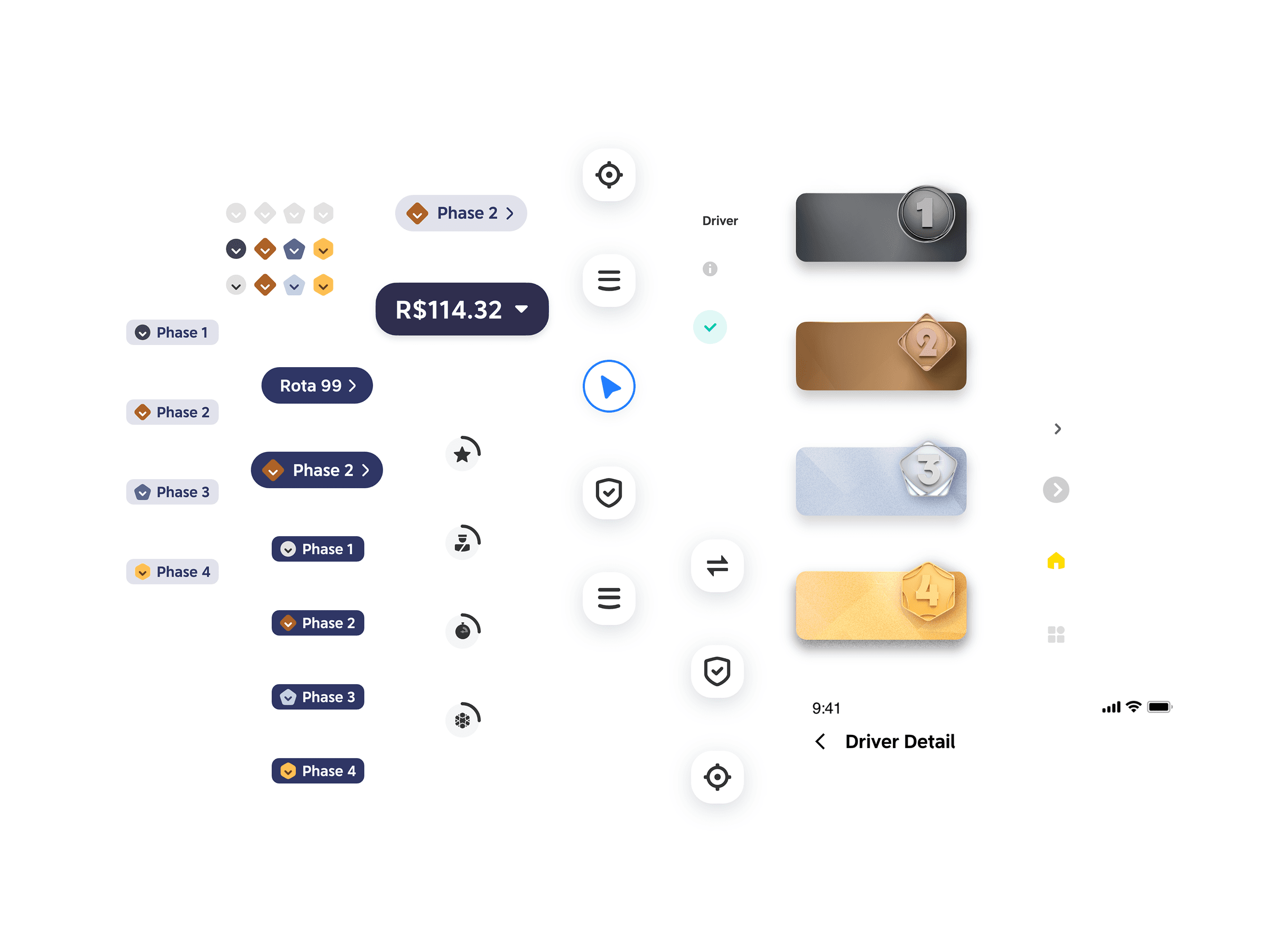
Homepage sidebar - Level Entry; This entry displays the driver's current level icon + level name. When there is no level "Level 0", the icon displays "DiDi Elite", with up to 4 users at the same level sharing the same icon.
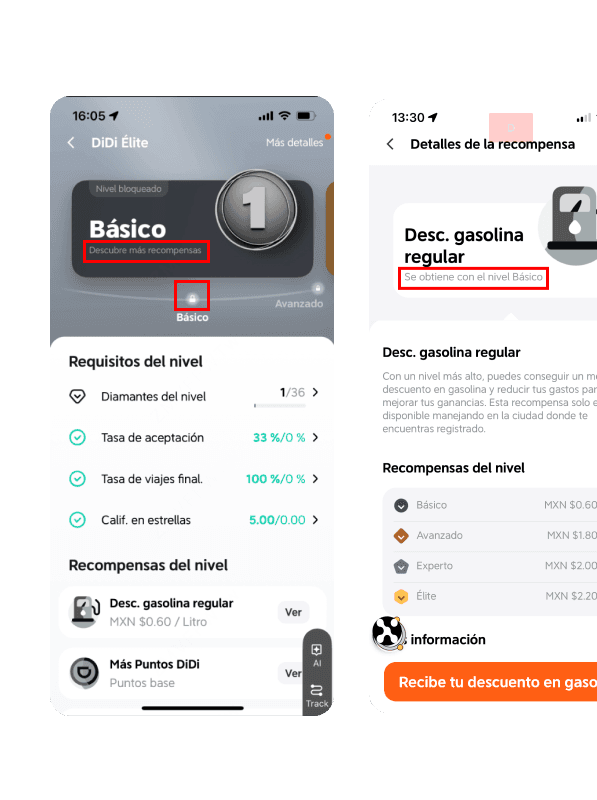
unclear value of the rights and interests
Tier Center Page
Issue: Tier 0 drivers cannot see the specific benefits of other tiers, leading to low motivation to upgrade.
Change: Display the specific value of monthly gas station discounts and other benefits on the Tier Center page to help drivers intuitively understand the benefits after upgrading.
Issues with the Benefits Details Page:
Benefits such as gas station discounts lack specific monetary descriptions, making it difficult for drivers to understand how much they can save each month or the actual benefits of upgrading.
Reform: Display the specific discount amount for each tier on the benefits details page (e.g., "Save X yuan per month") and highlight the total benefit value to help drivers intuitively understand the upgrade benefits.
New benefits:
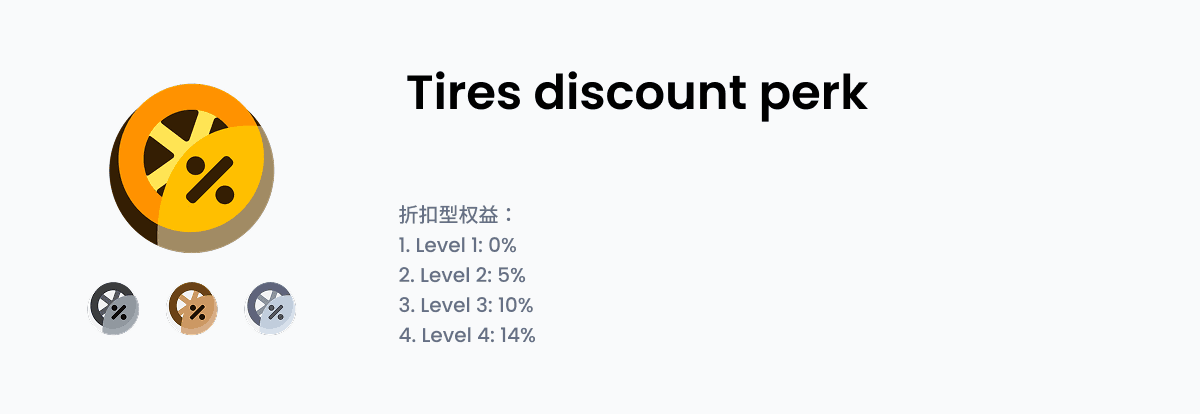
New text-based benefits for car maintenance and gasoline discounts perk, as well as tires discount perk, financial perk, and financial tax declaration perk, for a total of four levels of benefits. Each level has four different levels, and the levels of the different benefits vary, as do the countries where they are offered.
Lack of guidance on task progress
Level Center Page
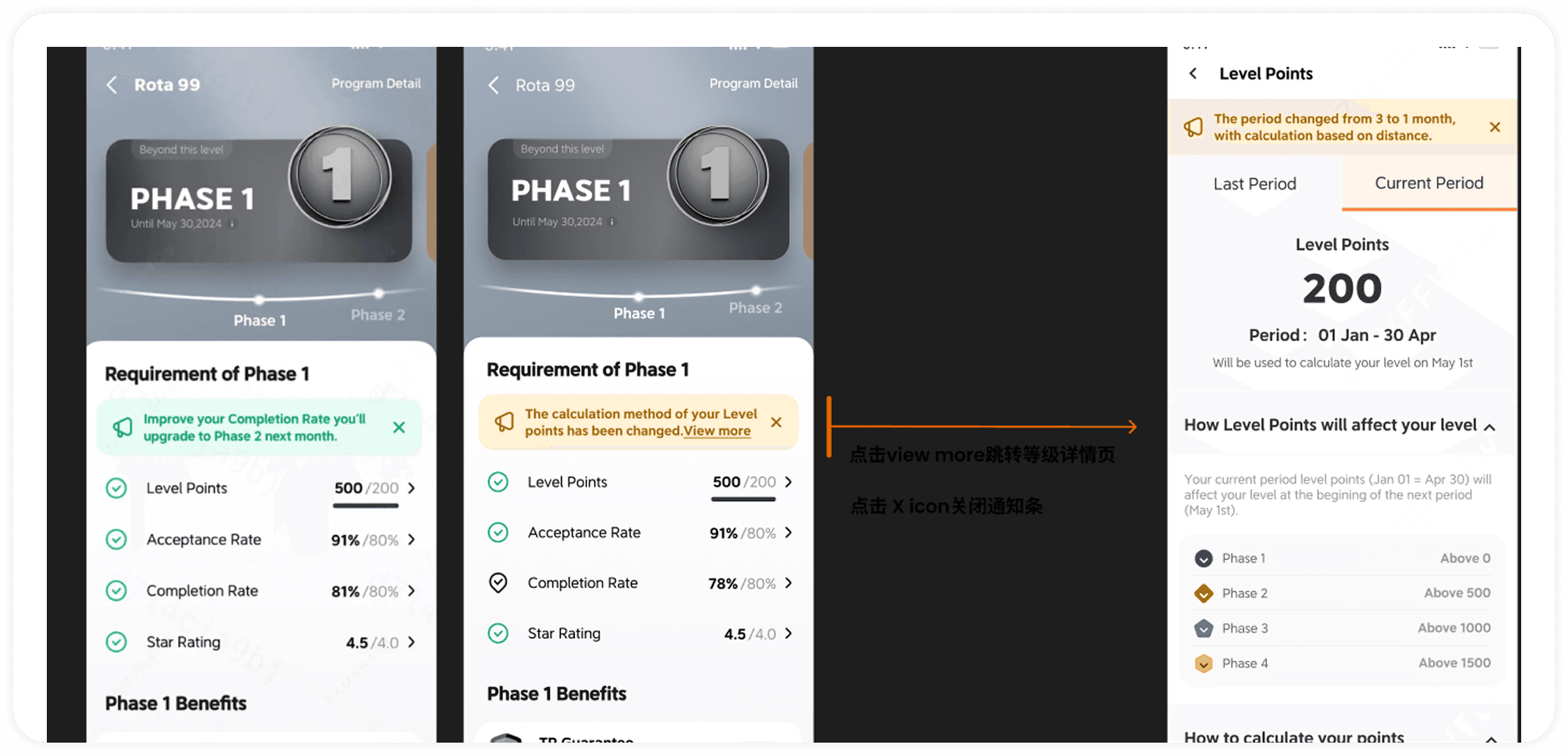
Issue: Drivers cannot check their mission progress in the Level Center.
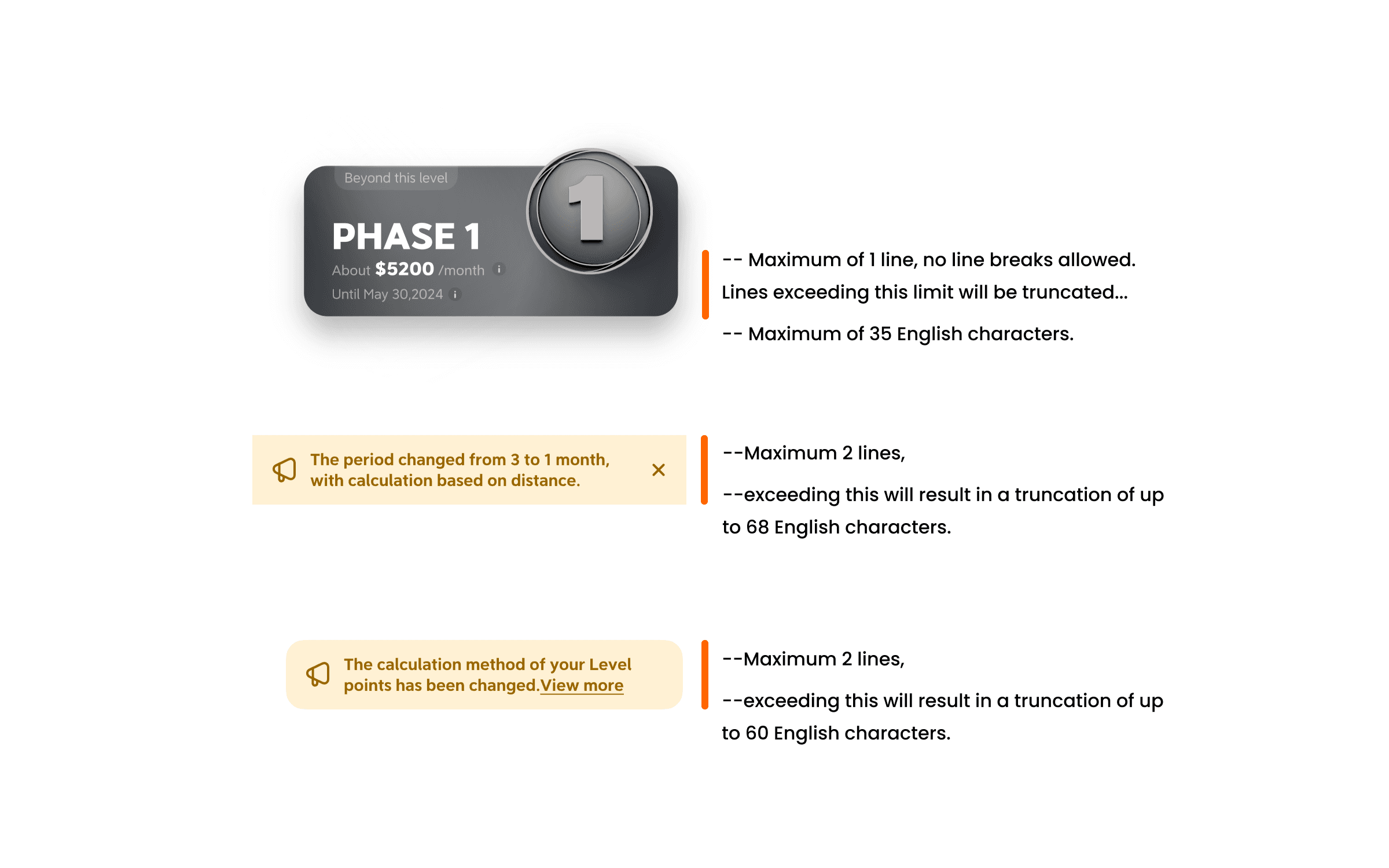
Changes: The calculation method for your level points has been changed, and a "View More" button has been added.
Indicator Details Page
Issue: No new changes are indicated in the indicator center.
Changes: Explanation of specific timeframes and calculation methods has been added; the period has been changed from 3 months to 1 month; the calculation method has been changed to mileage-based.
Design process
Competitive analysis
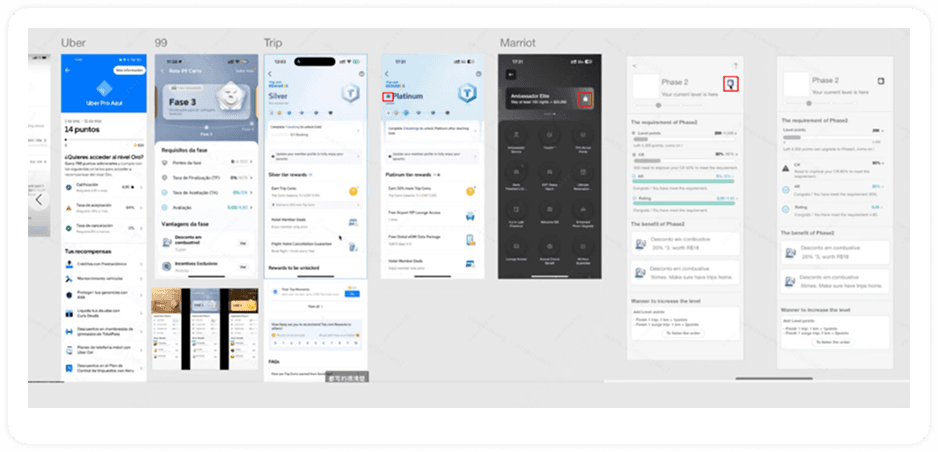
Compared to competitors, the driver rating system in our driver rating center is weakly designed to highlight unmet conditions. While our interface uses a uniform icon and green to indicate completed tasks, it doesn't adequately draw drivers' attention to uncompleted tasks, so we need to emphasize them. Uber uses yellow warning symbols to highlight unmet conditions, making uncompleted tasks more noticeable to drivers.
Strategic Alignment & Product Scoping
Rollout Scope: Global overhaul or SSL-specific? Finalize country lis Visual Impact: Can UI/UX refinement alone fix Tier 0 perception and upward migration?Optimization Balance: Align on the trade-off between business effectiveness and premium aesthetics.
Unclear equity value
Driver's Perspective
Drivers lack a clear understanding of the specific benefits of level upgrades (such as the amount of money saved through gas station discounts), which leads to a lack of motivation for them to actively participate in the system.
Platform Perspective
The platform lacks sufficient "traction" to incentivize drivers to pursue upgrades/maintain their status, thus missing opportunities to improve driver retention and engagement.
Business Needs
The goal is to clearly demonstrate the value of monthly benefits, allowing drivers to perceive the specific advantages of different tiers (such as monthly savings), thereby enhancing their motivation to upgrade and their loyalty to the platform.
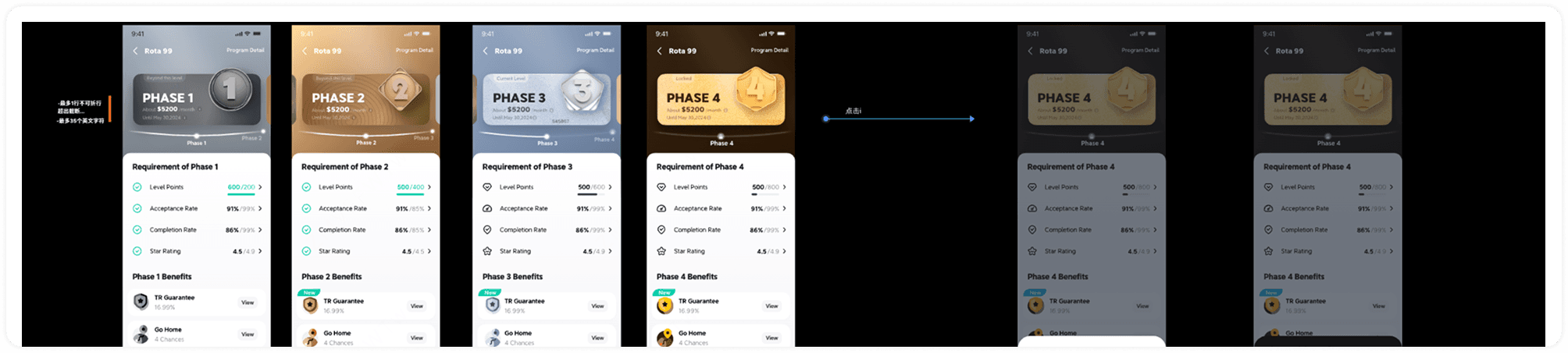
Questions for consideration: 1. The design focus is primarily on visually highlighting the text content and the semi-floating layer design; therefore, achieving product goals and balancing visual effects are crucial. 2. Selection of jump button style.
UI KIT
Solutions and Interaction Processes
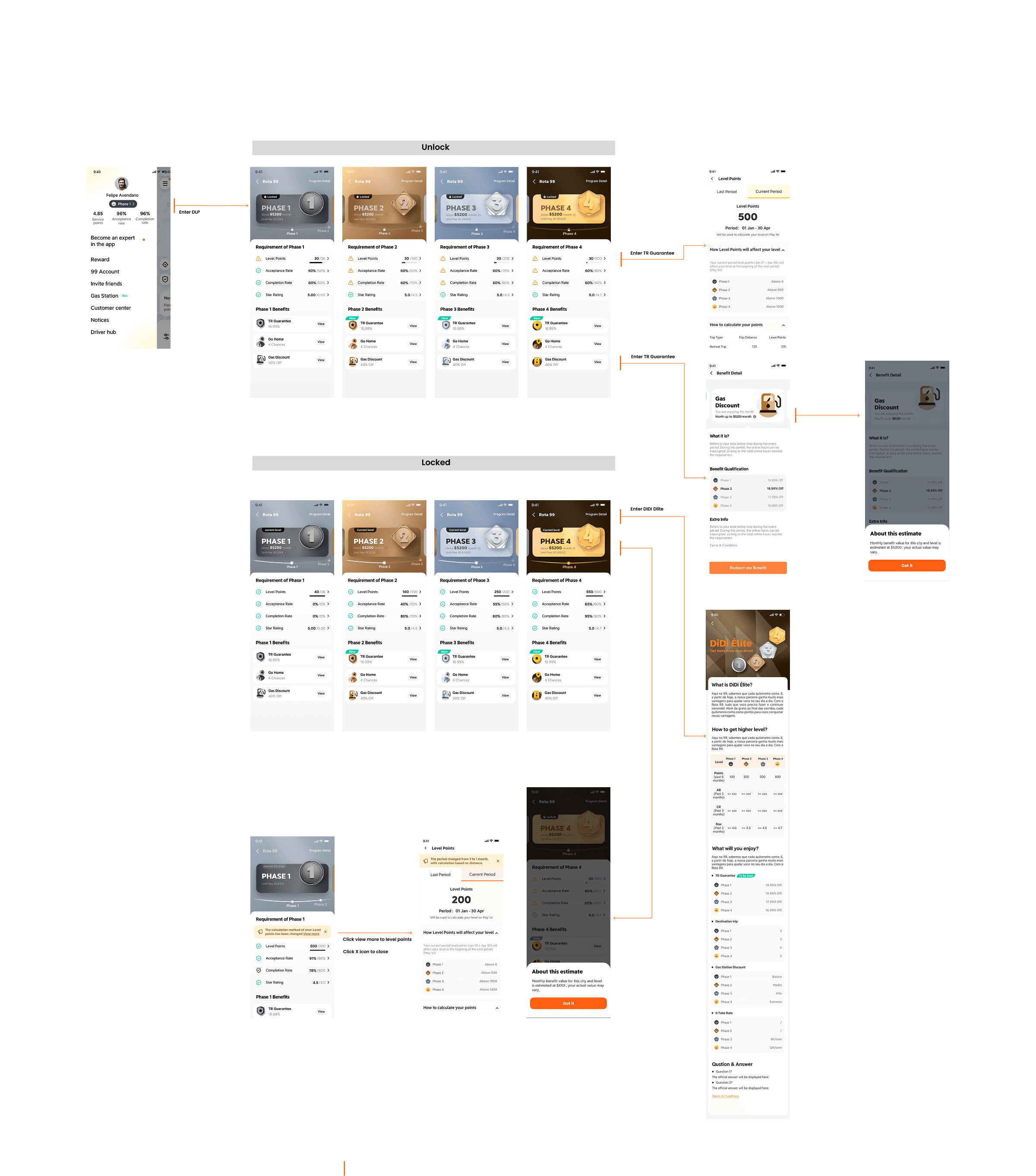
The progress bar is triggered by status, appearing when the progress of the next cycle is 80% or less, or when the progress of the next milestone is within 20%. The yellow rule change notification appears only once; it is educational and appears in the level center and indicator details page. When both notifications appear simultaneously on the level center page, the rule change notification takes precedence over the progress bar.
Q&A
Audit Discovery: The SSL-specific policy conflicted with the Global rollout plan. Specifically, the strategy clashed with Brazil’s logic and the "Level Center Progress Bar" UI. Design initiated immediate alignment to resolve these inconsistencies and prevent inefficiency.
Design QA Discovery: The message bar’s two-line logic was treated as an edge case, but the Spanish translation exceeded character limits, causing UI inconsistencies and breaking the layout.
SUggestion
Streamlining & Proactive Leadership: Coordinated real-time communication across project modules to eliminate inefficiencies. Proactively engaged with stakeholders to resolve bottlenecks, ensuring high-speed delivery through goal alignment and preemptive problem-solving.
In-depth Business Insight: I proactively sync with PMs before audits to master the project’s current state, historical versus new policy shifts, and core product logic, ensuring design decisions are deeply rooted in business context.