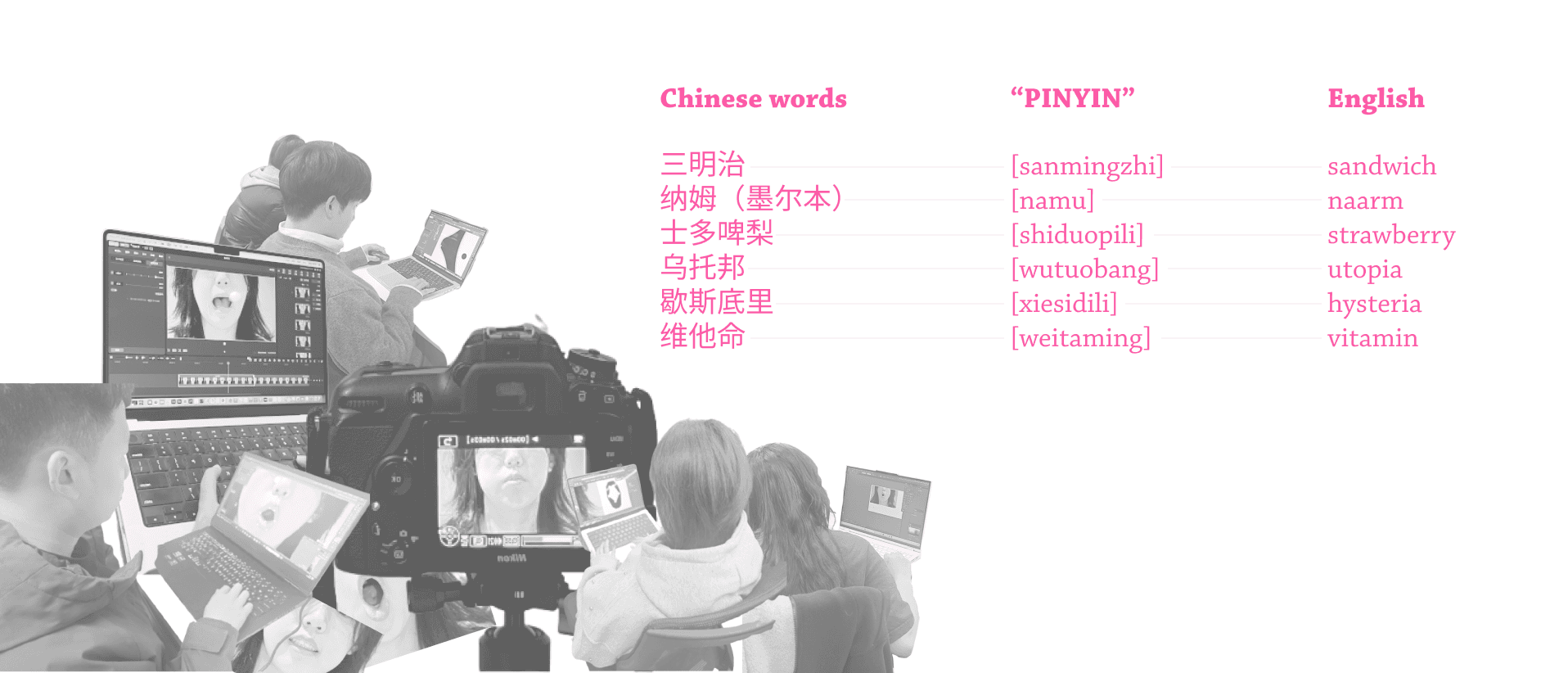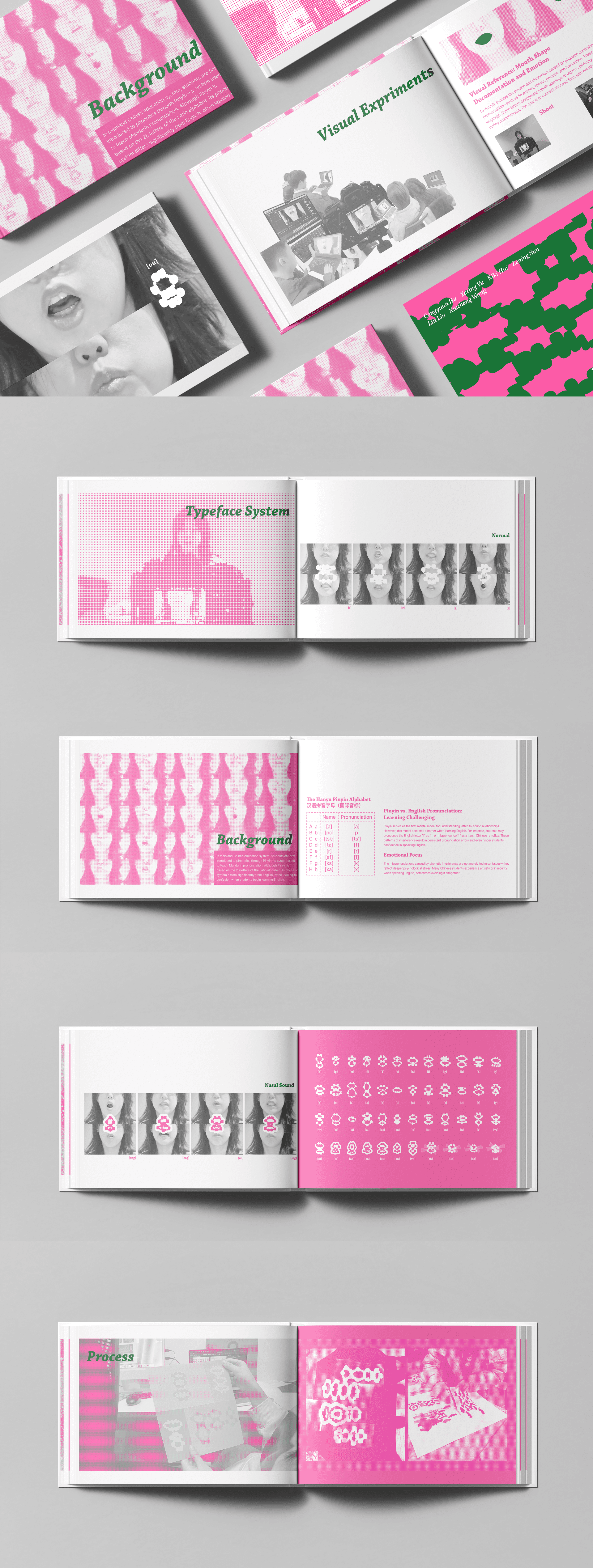
In mainland China’s education system, students are first introduced to phonetics through Pinyin—a system used to teach Mandarin pronunciation. Although Pinyin is based on the 26 letters of the Latin alphabet, its phonetic system differs significantly from English, often leading to confusion when students begin learning English.
Overview
Emotional Focus
The mispronunciations caused by phonetic interference are not merely technical issues—they reflect deeper psychological stress. Many Chinese students experience anxiety or insecurity when speaking English, sometimes avoiding it altogether.

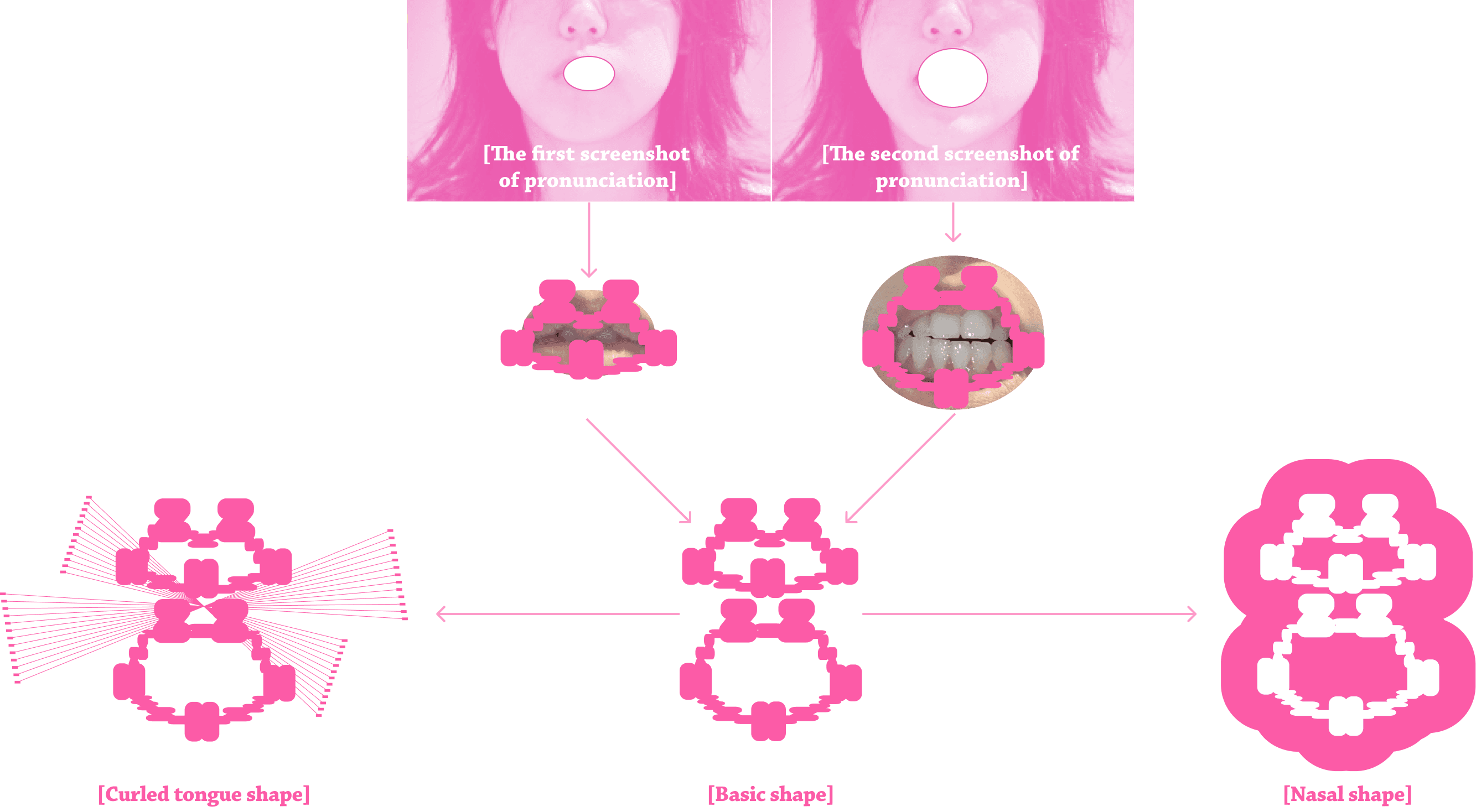
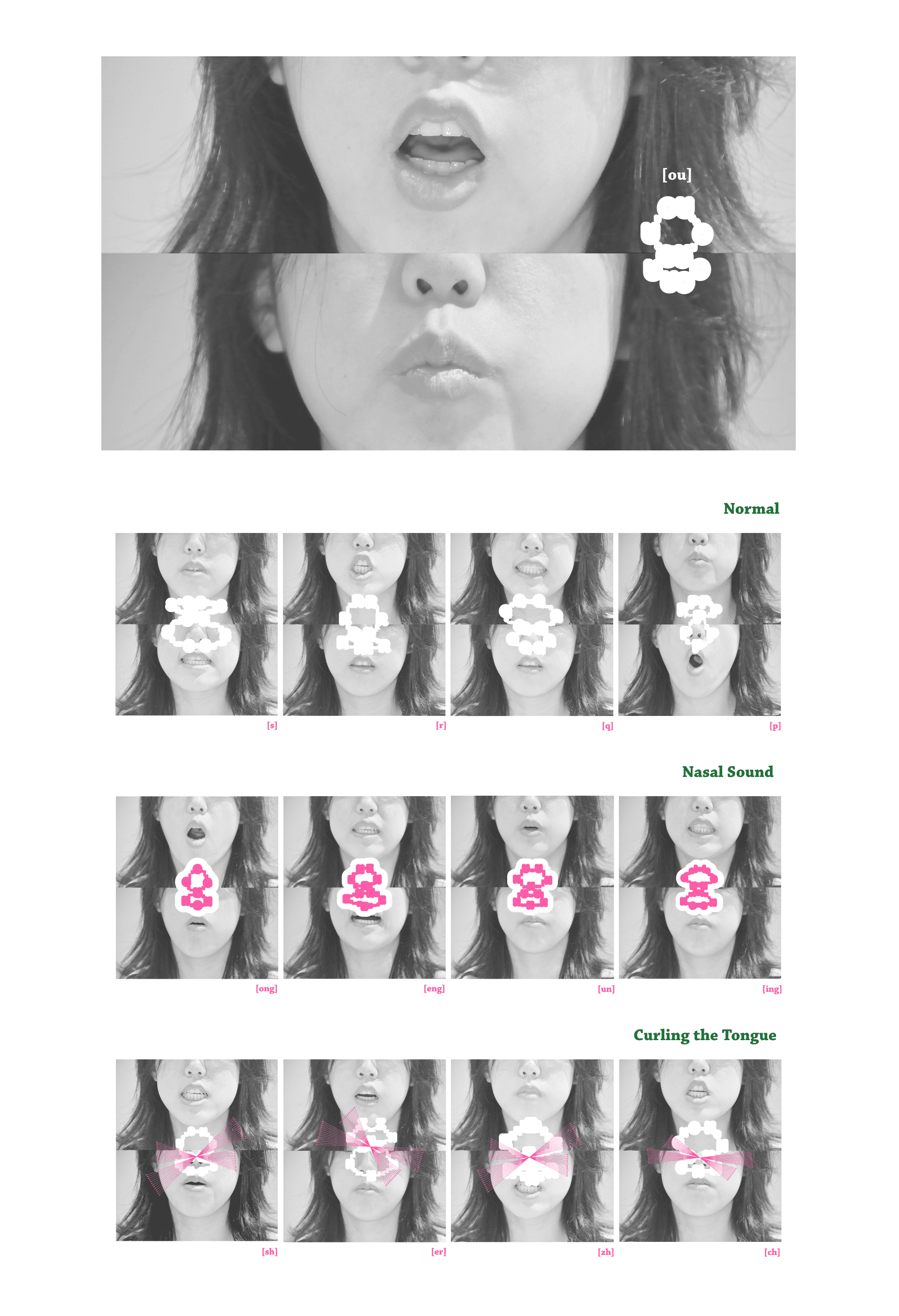
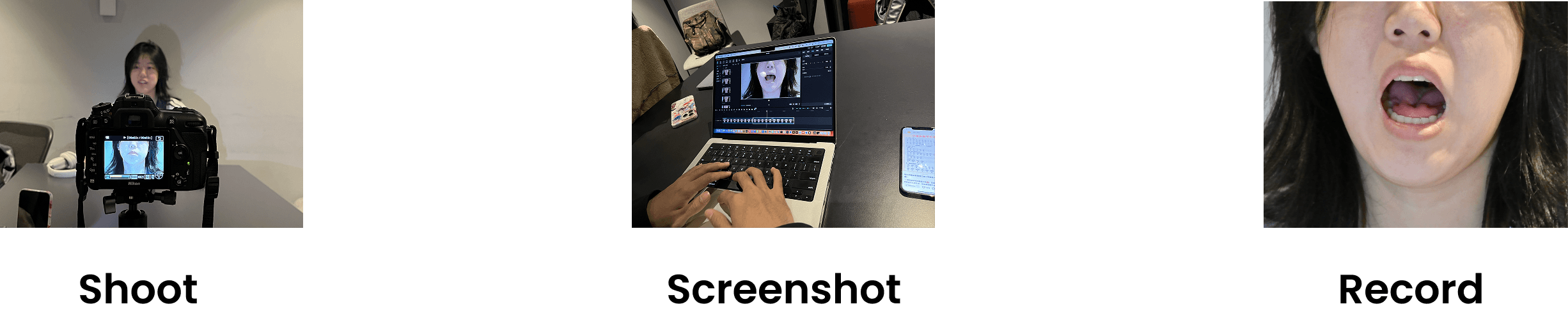
Visual Reference: Mouth Shape Documentation and Emotion
The mispronunciations caused by phonetic interference are not merely technical issues—they reflect deeper psychological stress. Many Chinese students experience anxiety or insecurity when speaking English, sometimes avoiding it altogether.
The Exploration of Style nodes
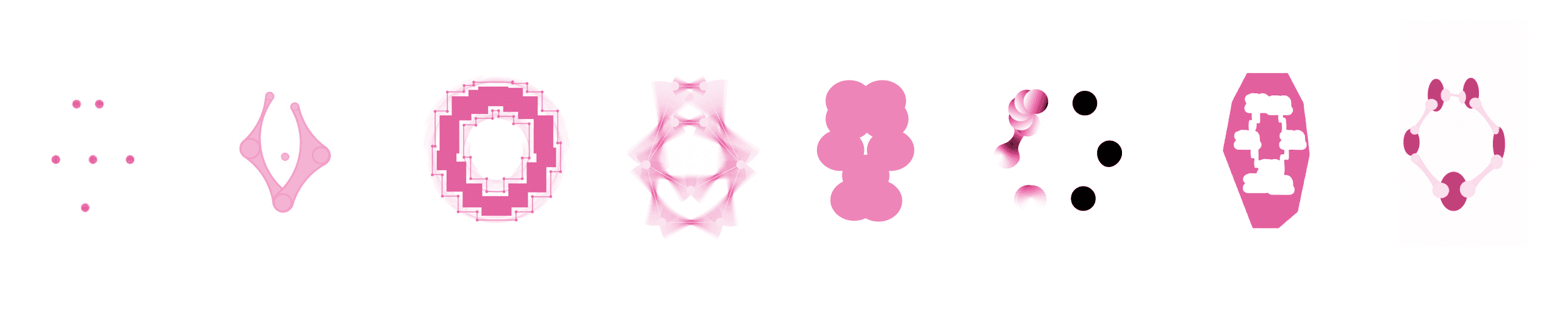
We explored a variety of stylistic “nodes” in type design—such as geometric construction, hand-drawn gestures, and exaggerated distortion. Each style acted as a different visual and emotional direction. We tested these styles by pairing them with mouth shapes to evaluate both legibility and expressive resonance. The experimental process also integrated peer feedback and emotional alignment with the theme of pronunciation anxiety.
Final Visual Direction & Visual Components
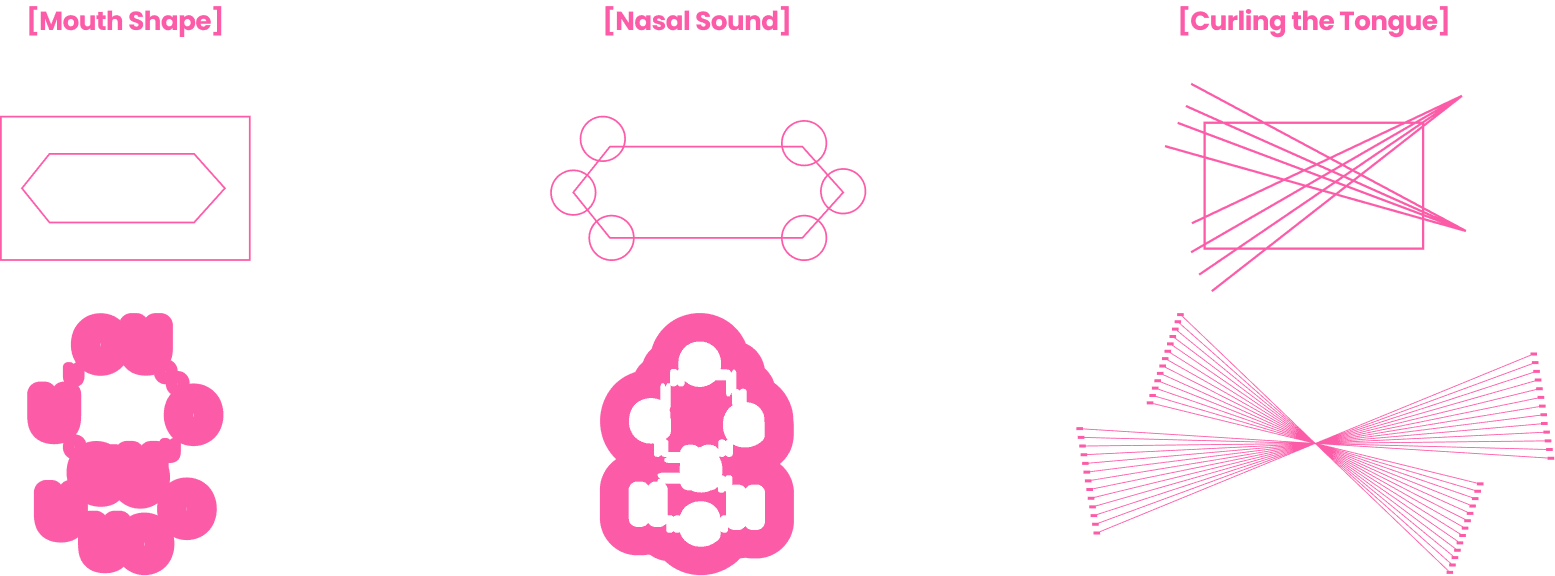
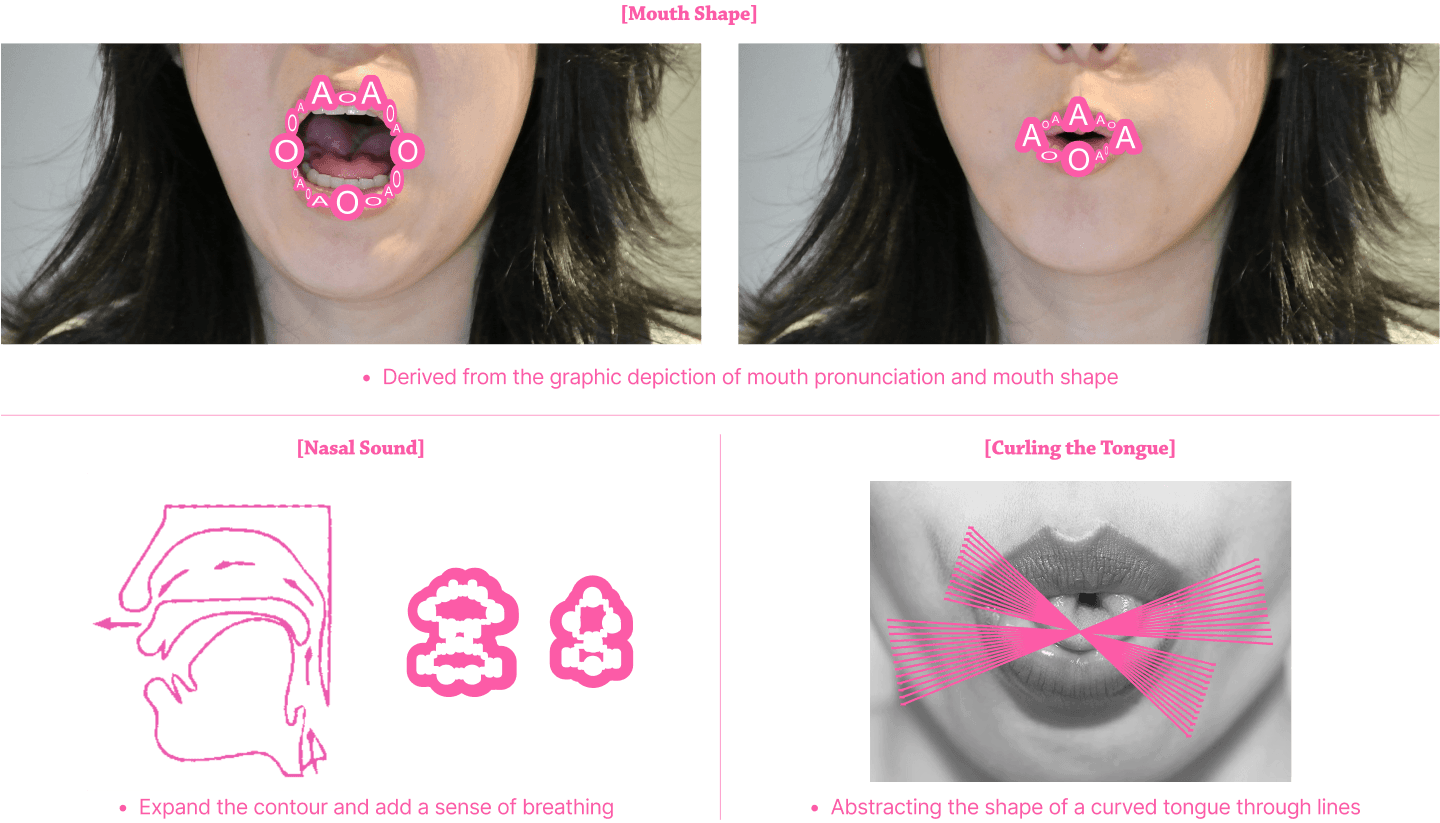

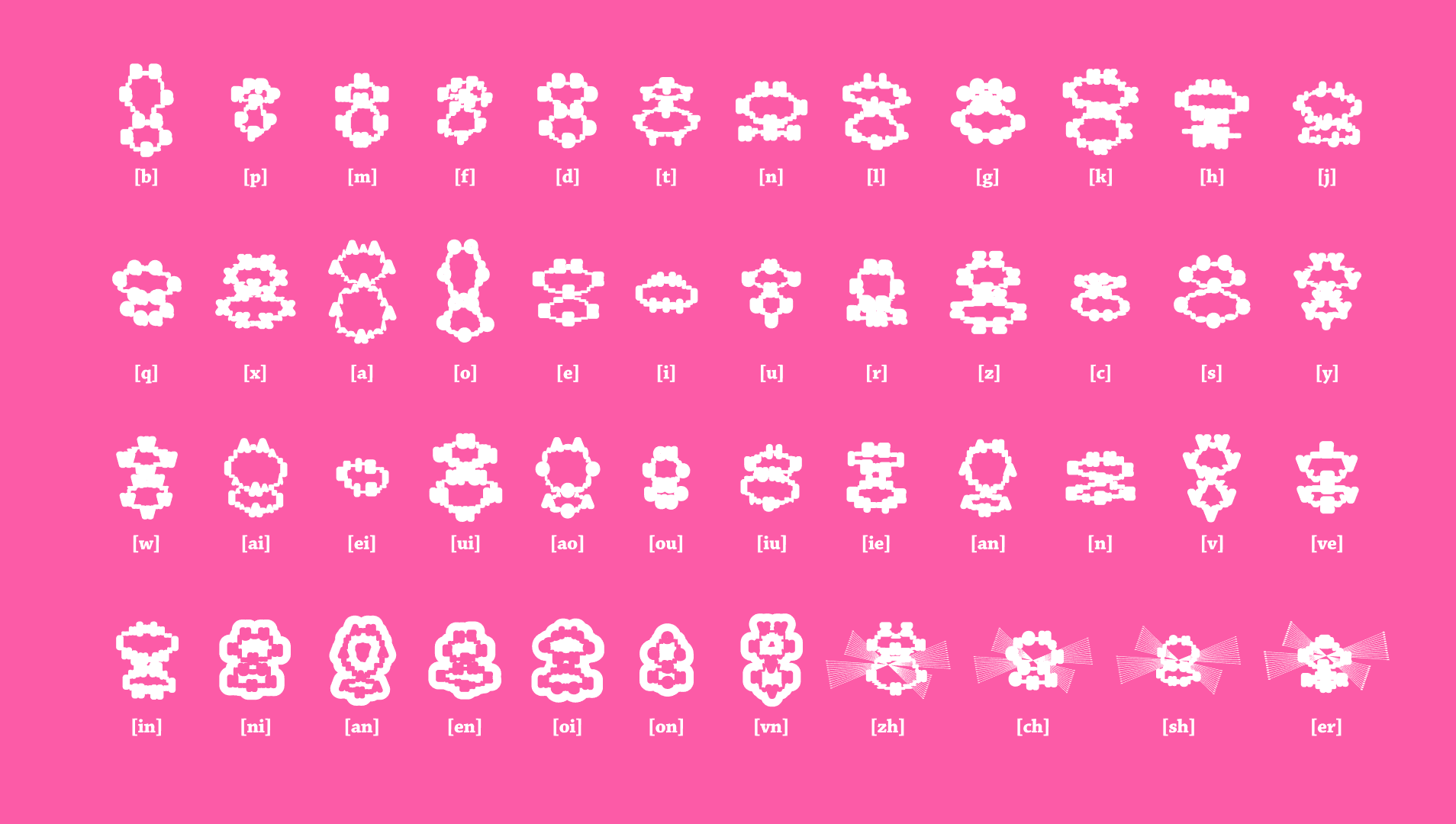
Pin Yin sound based on Alphabet
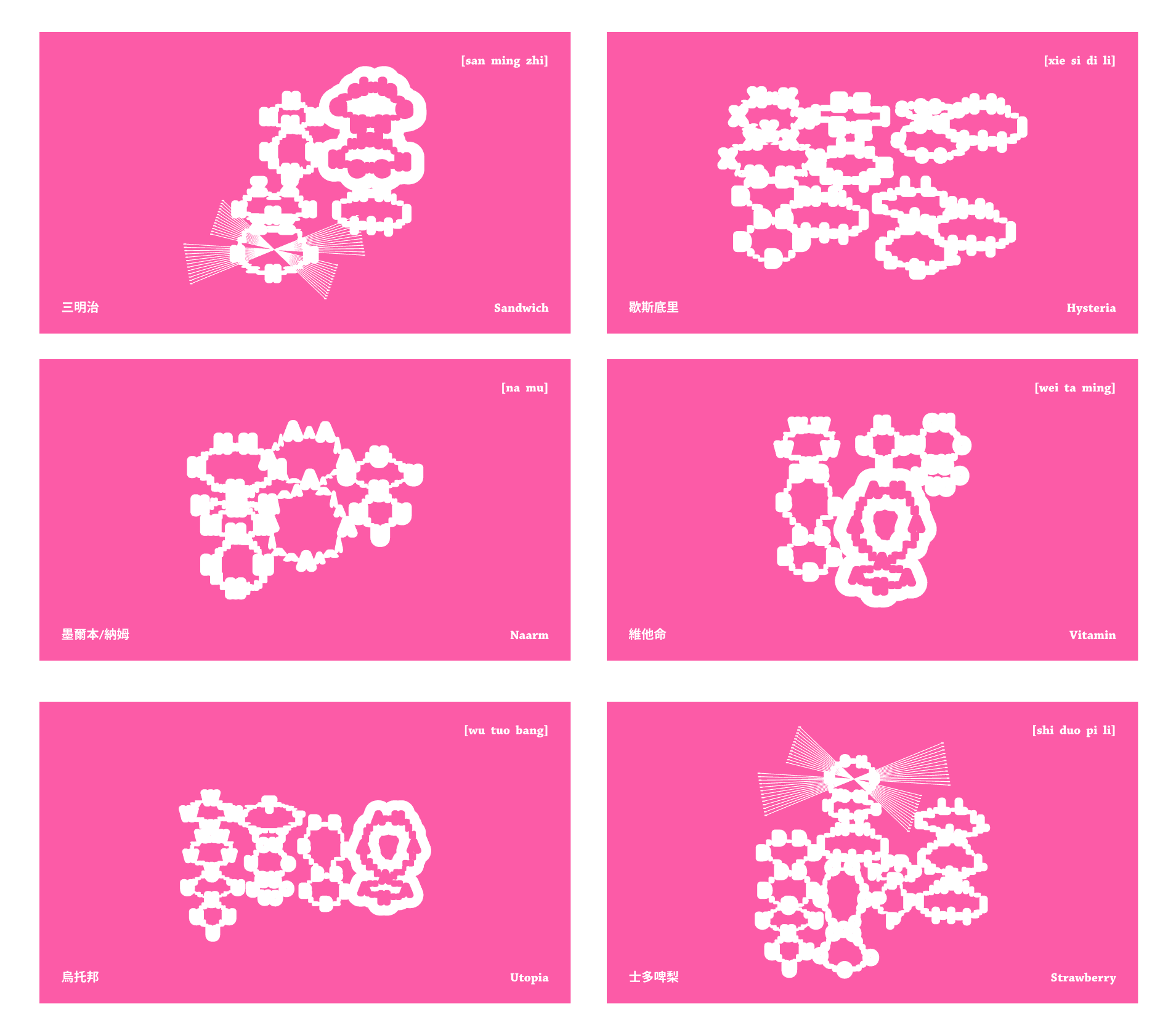
This type system reimagines the standard Latin alphabet by reconstructing each letterform based on the physical articulation of Pinyin phonemes. Each letter corresponds not only to its alphabetical role but also to a specific mouth shape or vocal gesture. For example, letters like “d” and “t” involve tongue-tip contact and are visually represented with split or lifted central stems. Rounded vowels such as “o” and “u” are designed with tight, closed curves that reflect lip rounding. This bodily-informed approach creates a dynamic and physical visual alphabet.