Between currents
“Alter-Natives”, which challenges anthropocentric design paradigms and proposes artefacts that affirm life processes. This theoretical lens helps situate our design within a broader ecological and ethical framework. Through this work, we aim to explore how participatory and poetic design approaches can foster collective responsibility and emotional reconnection with the Birrarung.
Martín Ávila’s Designing for Interdependence (2022),
Introduction
Approach
Building on this vision, our approach is grounded in Martín Ávila’s Designing for Interdependence
(2022), which calls for artefacts that sustain ecological life rather than extract from it. His concept
of “alter-natives” challenges the dominance of human-centred paradigms and invites designers
to co-create with, rather than for, the non-human world.
This aligns with Jane Bennett’s (2010) notion of “vibrant matter” which recognises vitality and
agency in material systems and, together with Ávila’s framework, frames design as an ecological
practice — one that listens, adapts, and responds to the living forces of place.
We approached theory not as passive background knowledge but as a driver of our design
thinking. Our project engages with his critique of globalised design paradigms and his call for
artefacts that sustain, rather than abstract from, ecological realities.
In the context of the Birrarung — a river whose flow has been disrupted by human privilege and
urban development — this framework asks what design might become when it shifts from control
to participation.Translating these ideas into practice required rethinking both visual and technical processes.
Instead of imposing control, we adopted an ecological method that allowed forms — light,
movement, and rhythm — to emerge from the metaphor of “breathing with the river.
” Through this process, theory moved from concept to practice, guiding how design behaved and evolved
Theory
This approach shaped our social design approach, positioning design as a mediator of life instead of a tool of dominance. It challenged our assumptions about authorship and agency, prompting us to ask what it means to design with rather than for the river. By situating our work within the living context of the Birrarung, we explored how communication design can enact interdependence — connecting theory, practice, and care for the river’s future. This revealed the challenge of balancing poetic abstraction with communicative clarity — testing how interdependence can remain perceptible within contemporary digital design.In this sense, Ávila’s concept of “alter-natives” became central to our approach, guiding us to reimagine artefacts as life-affirming and relational — allowing both design and the river to breathe together. It reminded us that social design’s “rigor” lies not only in method but in patience, listening, and allowing the non-human to set the pace of creative work.
Project Intent and Social Design Framing
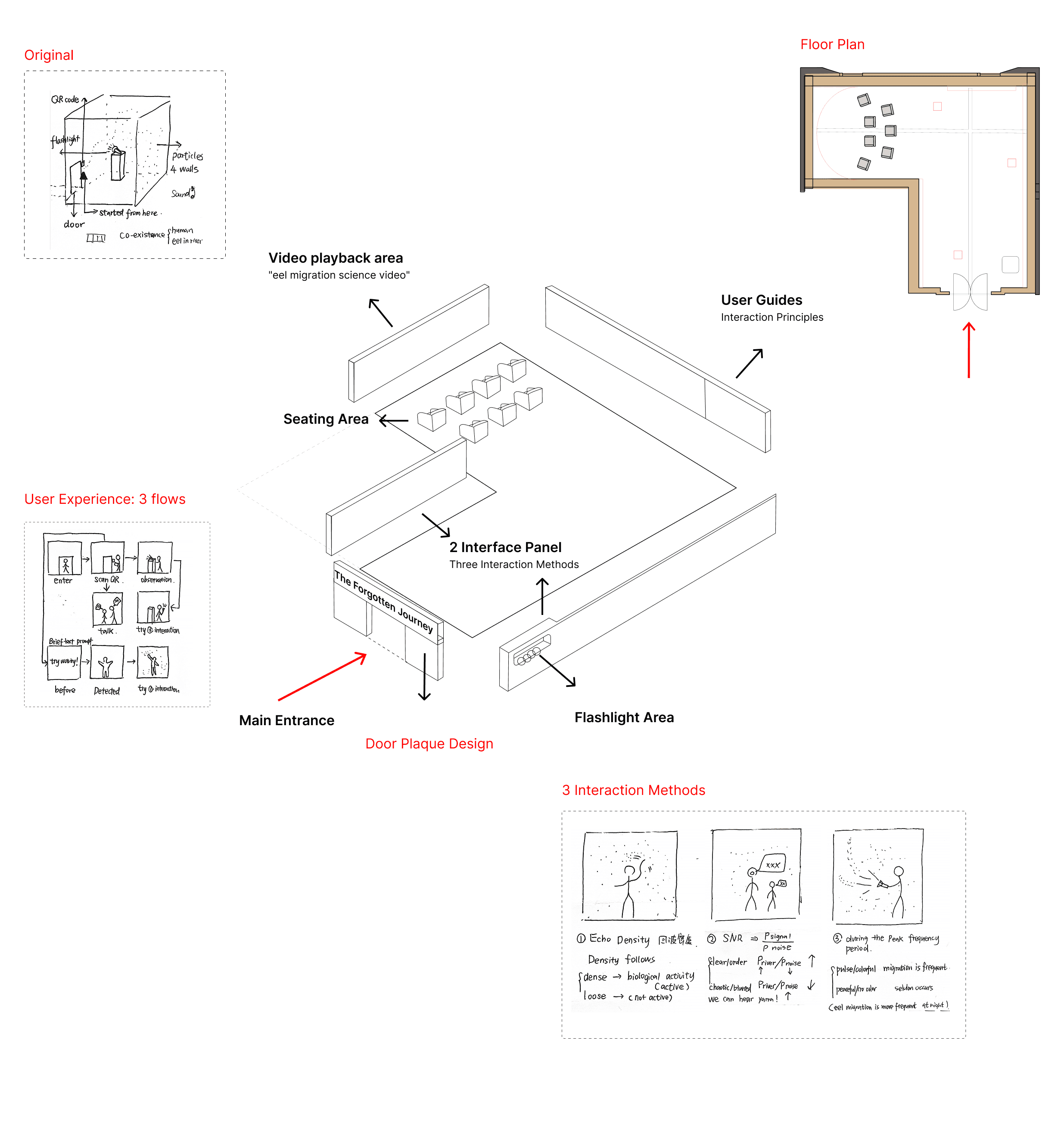
Between Currents — Where the River Breathes explores how communication design can act as a bridge between poetic experience and ecological awareness.Developed in dialogue with the Yarra Riverkeeper。Association (YRKA), the project reconsiders how design can cultivate emotional and ethical connections between people and the Birrarung. Rather than proposing a static installation, the work creates a participatory encounter that connects people to the river through gesture, movement, and light — aligning with Manzini’s (2015) idea of social design as collective participation and situated care.
Social Design Project Explanation
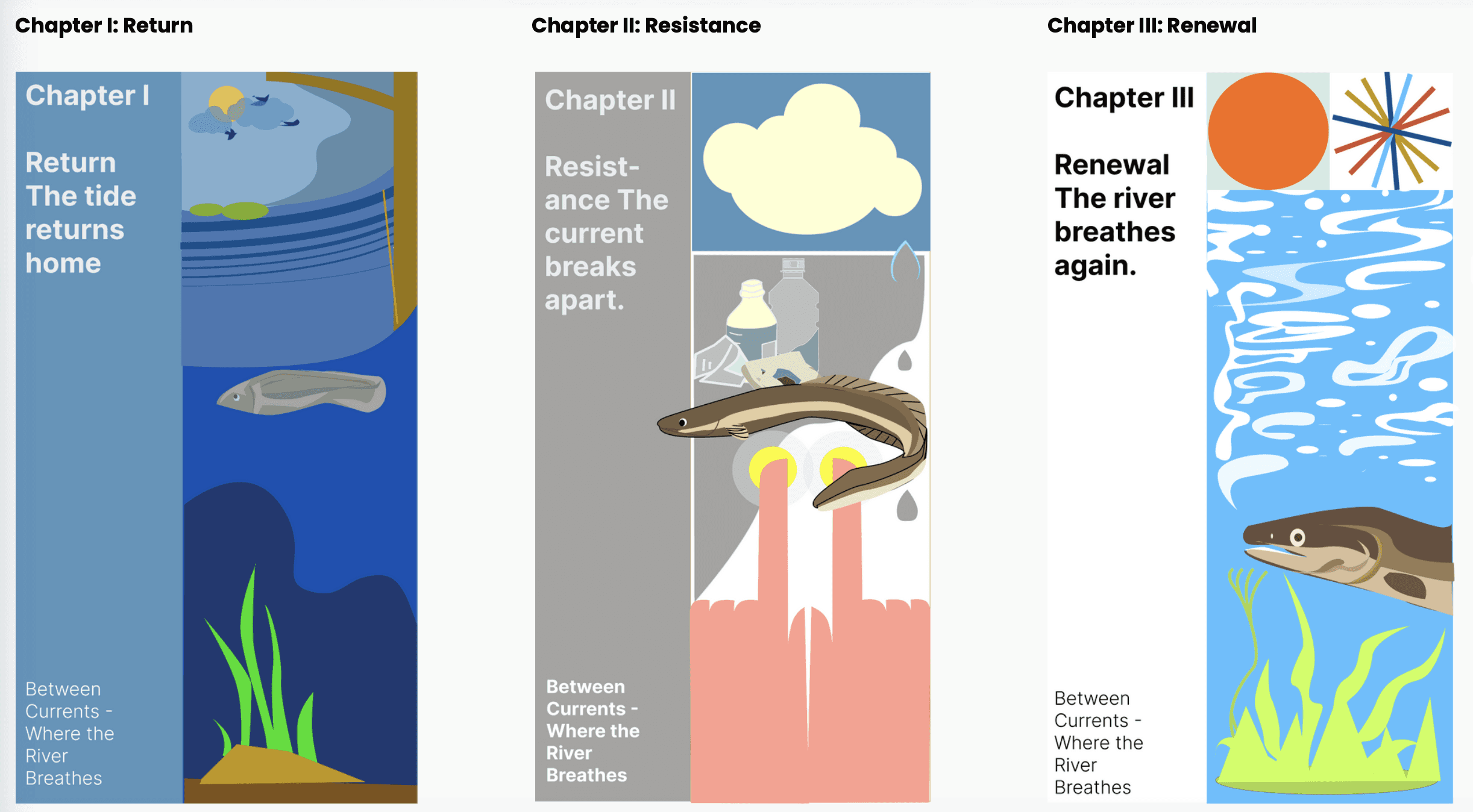
Social Design Project Explanation
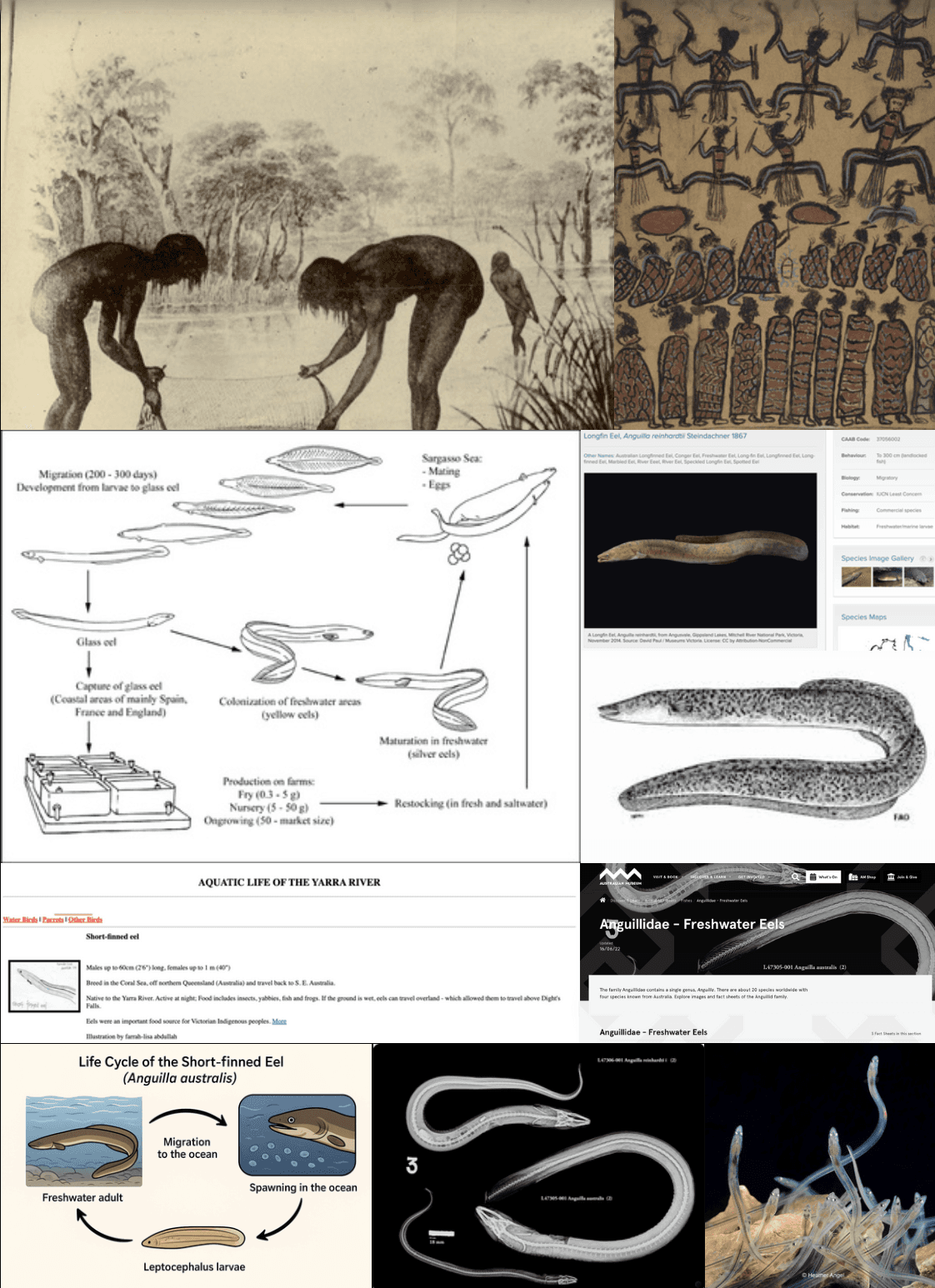
We chose the eel because it condenses multiple stakes into one living figure: river health, community livelihood, and Indigenous continuity. For Wurundjeri custodians, seasonal eel movements have historically aligned with food practices, ceremonial rhythms, and care for Country; thus, the eel’s return once indexed both ecological abundance and social well-being. In contemporary Melbourne, the eel becomes a relational indicator—its presence (or absence) materialises how urban privilege alters more-than-human lifeways along the river.
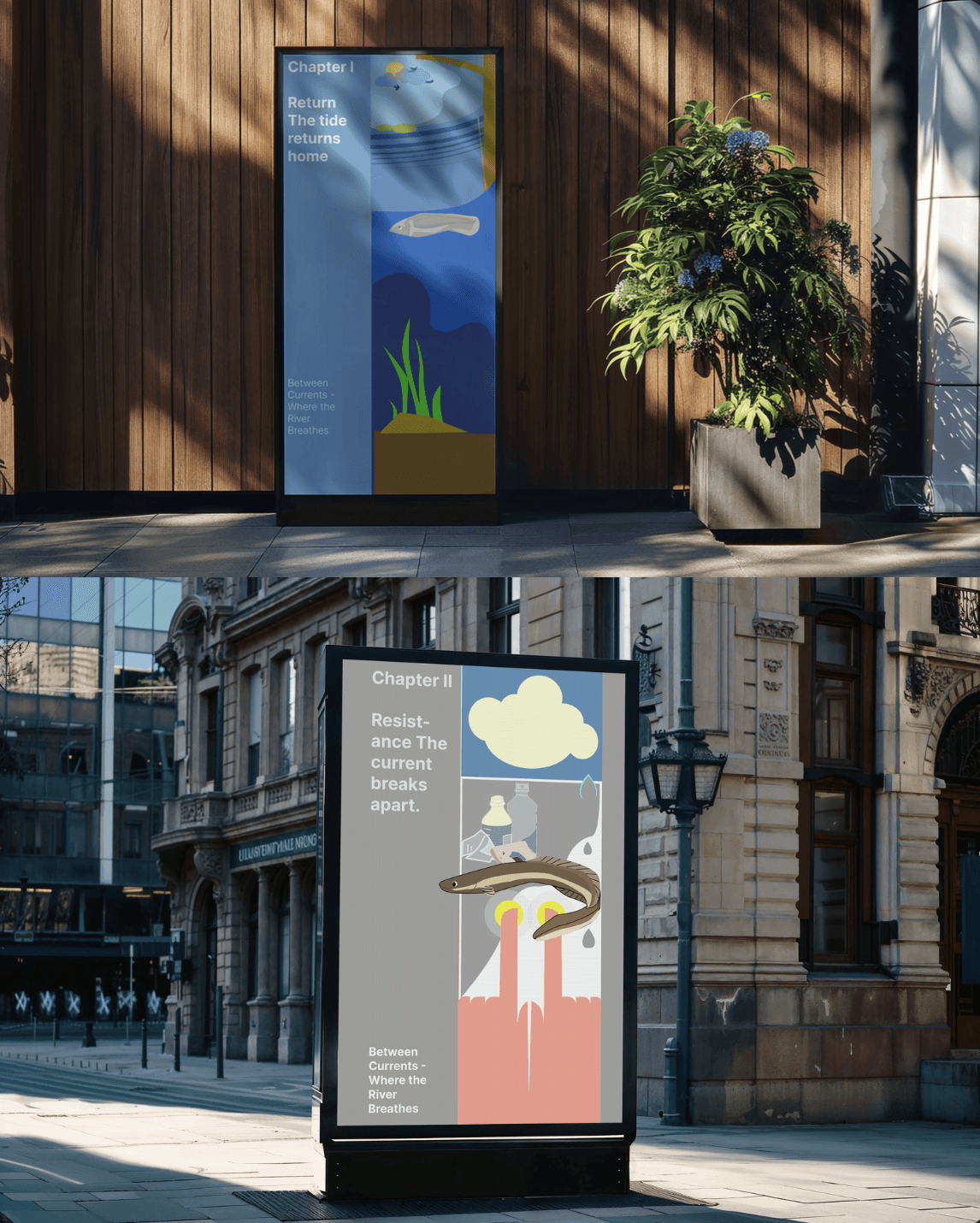
Public Engagement and Application
To make this experience accessible, the project is designed for adaptable public and educational contexts. It could appear as a temporary digital installation along community pathways near the river, be integrated into educational events organised by YRKA, or exist as an online prototype shared through their communication channels. Beyond these formats, the installation can also support awareness campaigns and school programs, translating ecological knowledge into a shared sensory experience. In all forms, it acts as a poetic medium for engagement, inviting reflection on how small human gestures can help the river “breathe” again. The design’s purpose is not to display the river from a distance, but to cultivate empathy — creating a space where people sense their shared responsibility toward a living system.
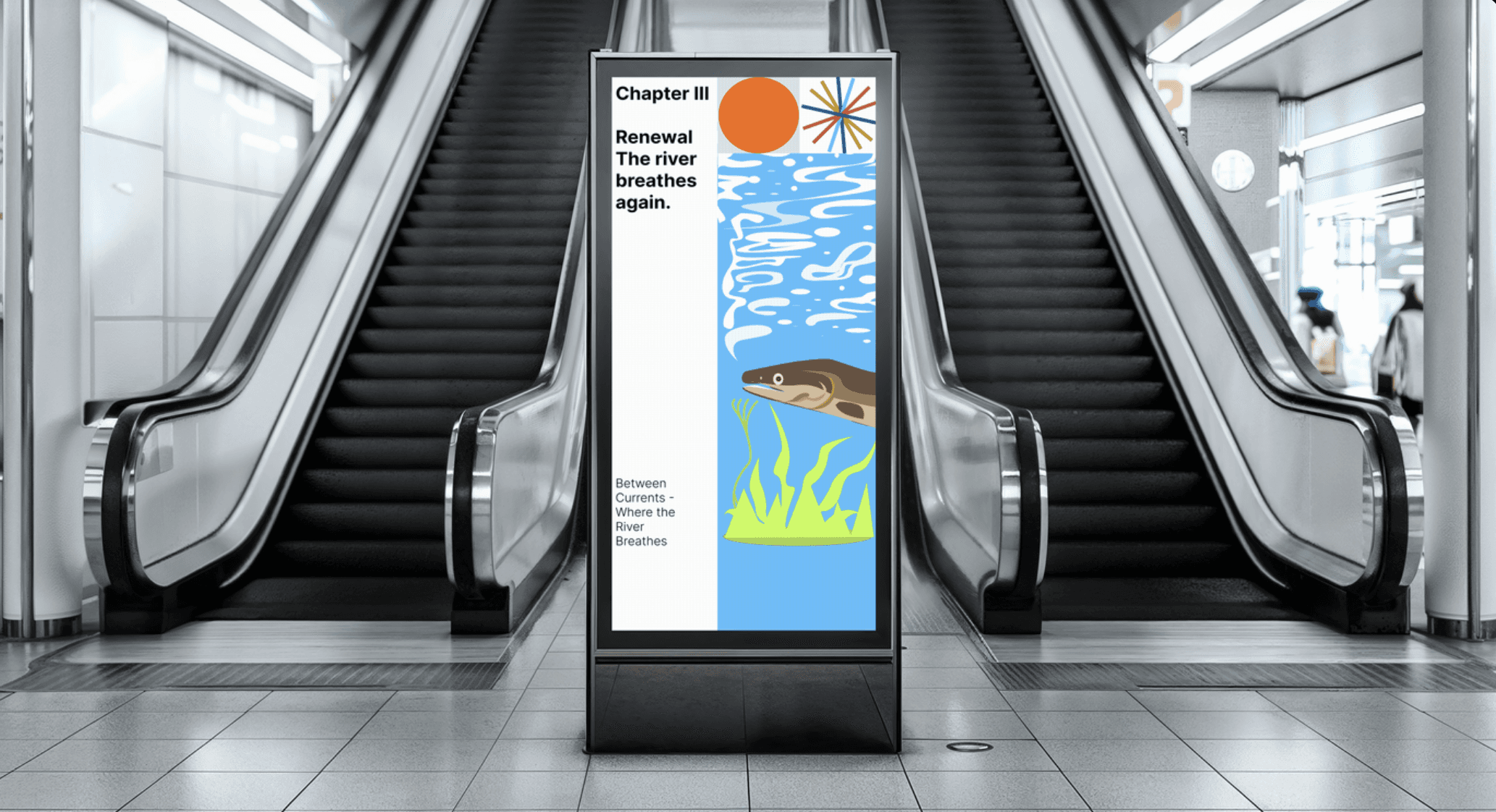
Critical Reflection
This project’s main strength lies in its capacity to communicate ecological ideas through sensory experience rather than didactic messaging. It translates complex theory into a poetic yet accessible encounter, fostering empathy without relying on text-heavy explanation. However, its speculative nature also presents limitations: as a prototype, it relies on future collaboration with YRKA and community partners to achieve broader social impact. Accessibility, maintenance, and contextual adaptation would require further design development to ensure lasting engagement.
Stakeholders & Collaboration Reflection
Throughout the project, our engagement with stakeholders was shaped more by research and consultation than by direct collaboration. The Yarra Riverkeeper Association (YRKA), invited by our tutors to review student work, provided valuable feedback that helped situate our project within their environmental advocacy framework. Their comments revealed that while our concept carried poetic potential, its abstract visual language risked distancing itself from YRKA’s community-oriented practice.
Beyond YRKA, we also drew upon secondary research and existing community projects to understand other stakeholder perspectives, including Indigenous relationships to Country and public attitudes toward the Birrarung (Wurundjeri Woi Wurrung Cultural Heritage Aboriginal Corporation, n.d.). Although these engagements were indirect, they expanded our sense of responsibility as designers: moving from representation toward relational forms of care and reciprocity. This approach underscored that designing “with” — whether with people, places, or ecosystems — demands humility and listening as much as creativity.
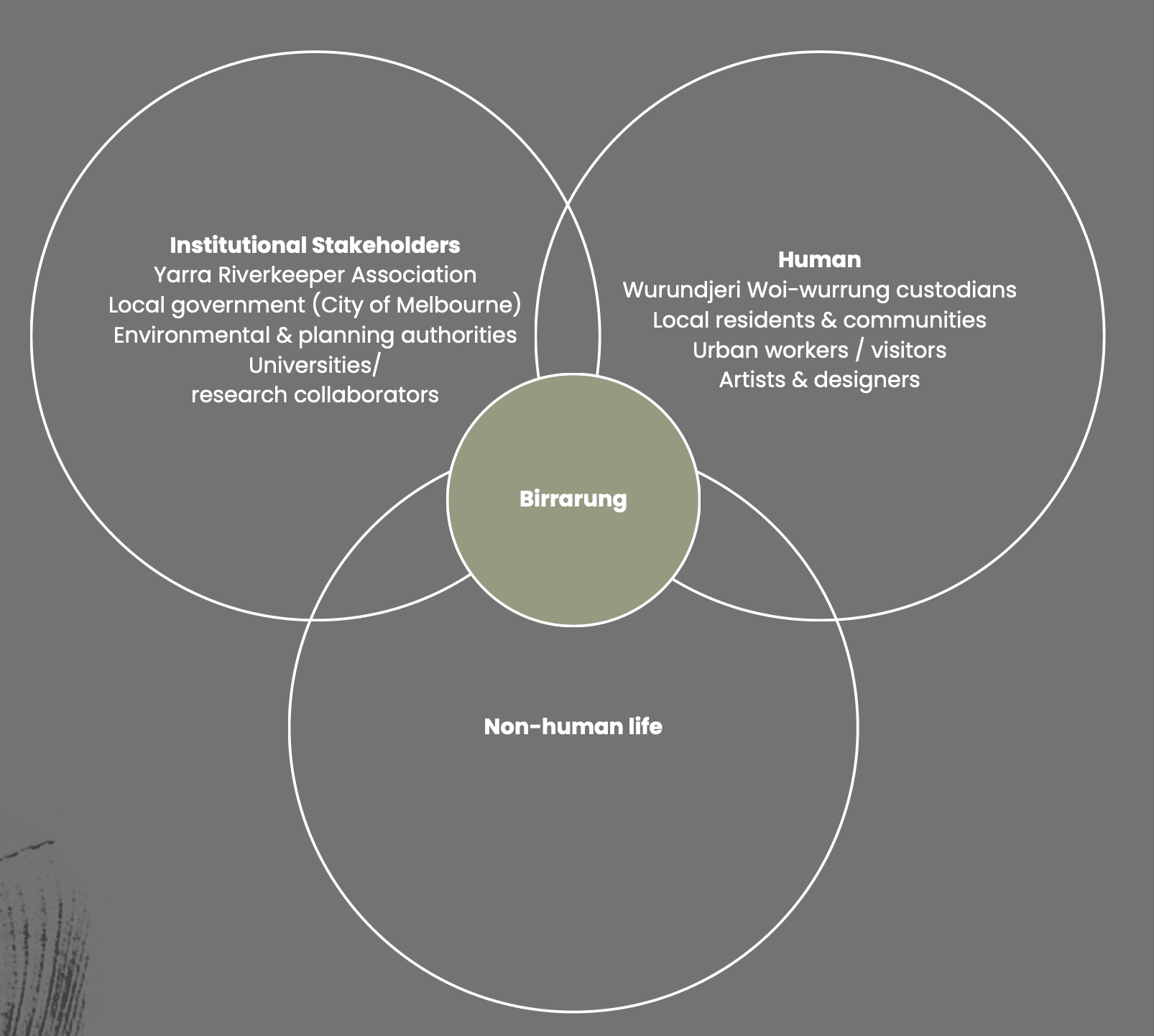
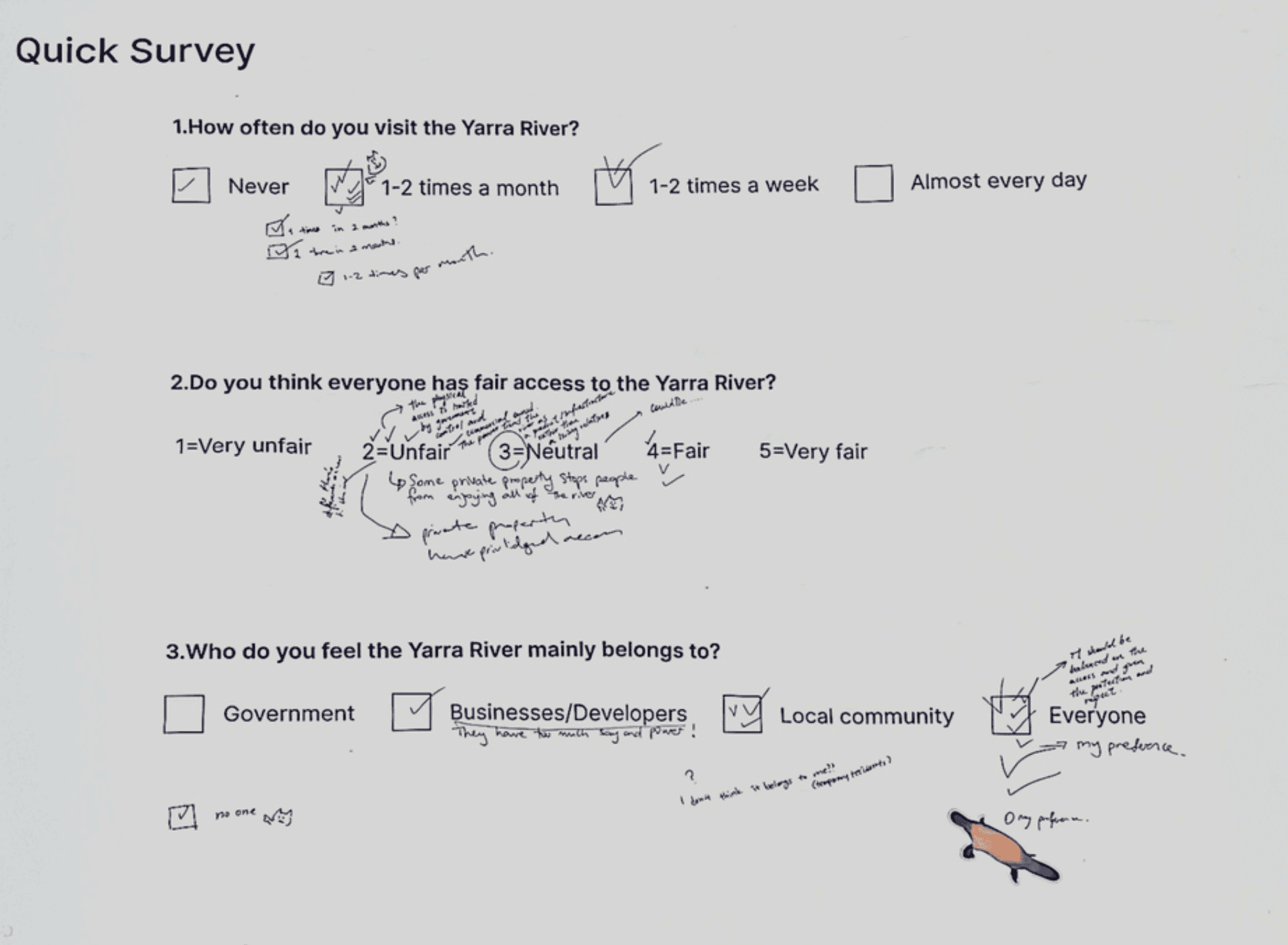
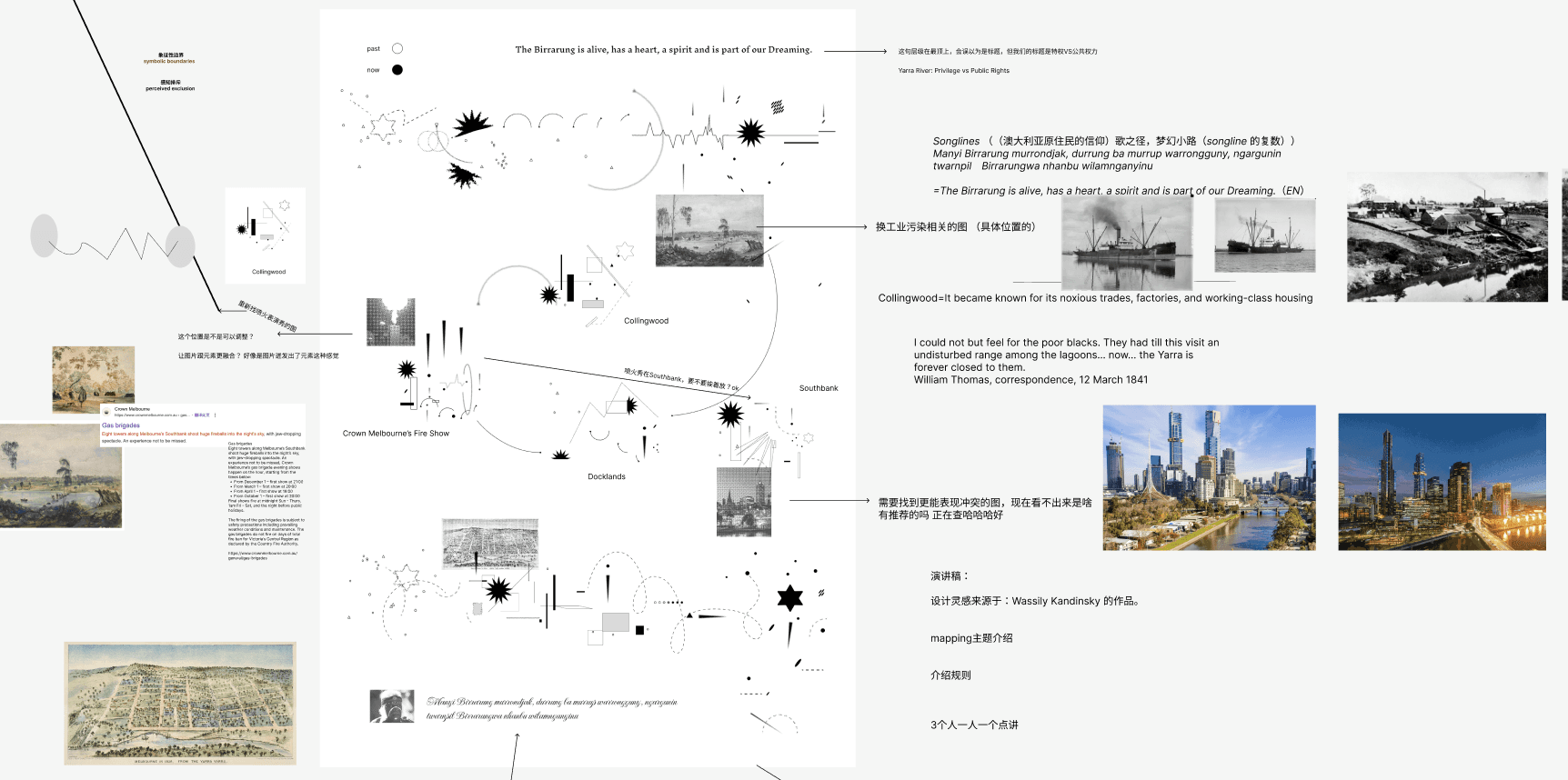



Critical map
NOTES